



At key border crossings and in resettlement areas, INTERSOS assists thousands of people every day who are forced to return to Afghanistan with no resources or support. In Kandahar, our team provides medical care, nutritional assistance, protection, water and sanitation services to the most vulnerable. In a context already marked by political, economic and environmental crises, our intervention helps reduce risks and supports people during the first, critical days after their return.
Afghanistan has one of the largest populations of refugees and internally displaced persons in the world. Millions of people have been forced to flee their homes, and by 2025 an estimated 22.9 million will need humanitarian assistance simply to survive (source: UN). This critical situation stems from the country’s limited capacity to address both long-term vulnerabilities and sudden emergencies. Recent political changes have further strained the context, prompting parts of the donor community and international actors to reduce or withdraw assistance to the Afghan government over concerns about its legitimacy. As a result, the economy has slowed sharply, jobs have disappeared, restrictions have increased, and many people no longer feel safe within their own borders.
According to IOM reports, since August 2021, approximately 3.42 million Afghans have left the country for neighbouring nations such as Iran and Pakistan. Many have crossed borders illegally, remaining unregistered, while tens of thousands have long settled in host countries. This mass exodus adds to Afghanistan’s existing humanitarian crisis, where natural disasters, earthquakes, flash floods, and climate change strike periodically, wreaking havoc on livelihoods and lives alike. The UN reports that 25 out of Afghanistan’s 34 provinces are experiencing severe or catastrophic drought conditions, worsening the dire situation.
The country’s crumbling infrastructure and scarce resources exacerbate vulnerabilities for those who remain. Climate shocks and natural disasters have further destabilised daily life, forcing approximately 3.2 million people to become internally displaced within Afghanistan, ranking it fifth globally in IDP populations. These individuals are displaced due to conflict, violence, persecution, or natural calamities but remain within the country’s borders, often living in precarious conditions.
In early 2025, the situation worsened when Pakistan began expelling Afghan nationals residing there, leaving many families with nothing and nowhere to turn. Humanitarian actors responded with limited resources, establishing response mechanisms such as INTERSOS Afghanistan’s operations at Kandahar Transit Center, providing health, nutrition, protection, and multi-purpose cash assistance to the most vulnerable returnees. Despite these efforts, the crisis intensified as Iran also began forcibly expelling Afghan migrants, leading to another large influx. Between January and August 2025, some 1.8 million people returned from Iran, with the peak in July when up to 44,000 people arrived in a single day from the borders of Islam Qala in Herat and Milak in Nimroz.
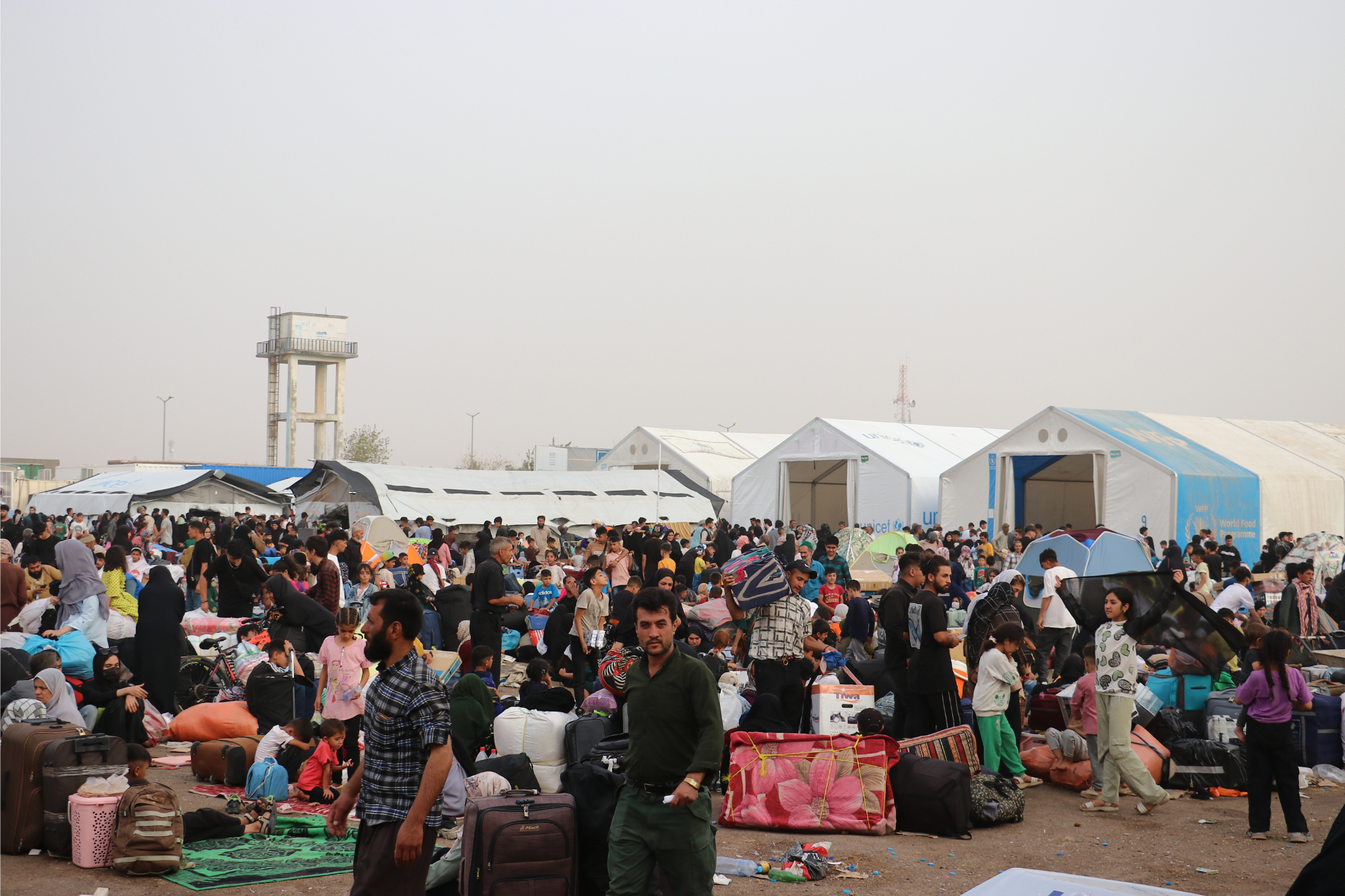
The conditions at these border crossings are dire. Many returnees arrive with nothing, many mothers and children in scorching 45°C heat, waiting for assistance with no certainty of shelter or support. The rising living costs in Afghanistan, coupled with unemployment and a lack of affordable housing, heighten the hardships. The demand for basic services—water, sanitation, health, nutrition, and protection- has surged, yet the country’s capacity to respond remains limited. Many returnees are left stranded without adequate support, facing a bleak future amid ongoing crises.
The government’s ability to manage this massive influx is overwhelmed, and humanitarian organizations are stretched thin. The urgent need for food, water, shelter, health services, and protection at border points and in settlement areas is critical. Recognizing this crisis, INTERSOS, with funding from the European Union, initiated early needs assessments in July 2025 across the affected provinces, including border crossings and returnee settlements. The organization is preparing to expand its response, working alongside other dedicated humanitarian actors who have been present since the beginning of this crisis.
INTERSOS has already begun providing essential services, health, nutrition, protection, and WASH, to ensure that returnees are not left behind at transit points or in settlement areas. Despite the ongoing challenges, these efforts are vital to alleviating suffering and building resilience among the most vulnerable populations.
The return to Afghanistan remains challenging, particularly for those arriving with limited resources or support networks. Political instability, economic decline, natural disasters and displacement continue to create significant risks for returnees. In this context, humanitarian organisations, including INTERSOS, are working to provide essential services and strengthen community resilience. Continued support from the international community is crucial to ensure that vulnerable Afghans receive the protection and assistance they need to rebuild their lives in a context still marked by pressing humanitarian needs.
Pictures of Esmatullah_Habibian.