



In the Far North region of Cameroon, insecurity, displacement, and limited access to essential services have created a prolonged humanitarian crisis that continues to affect the most vulnerable communities. In particular, malnutrition poses a significant threat to children’s health and development.
In the North of Cameroon, in the departments of Logone-et-Chari and Mayo-Sava, and in villages such as Djoundé and Dor, many families live with insufficient food resources and limited economic opportunities. Against this backdrop, INTERSOS, with the support of the Italian Agency for Development Cooperation (AICS), has launched an integrated intervention to strengthen community capacities in the prevention and management of malnutrition.
Activities on the Ground
Through its activities, INTERSOS has promoted an approach based on strengthening knowledge in several areas:
• Agricultural Training: Two hundred beneficiaries in some of our operational areas received training on sustainable agricultural techniques. This included the production and use of natural fertilizers and pesticides, the recycling of agricultural waste, and efficient resource management.
• VSLAs: Village Savings and Loan Associations (VSLAs) were established, allowing members to access microcredits to start small income-generating activities.
• Community Nutrition: In areas like Djoundé, Dor, and Ouloumssa, Positive Deviance Hearth (PDH) sites were activated. These are spaces where families and communities, guided by specifically trained mothers and fathers, are encouraged to adopt positive dietary habits for the prevention and treatment of moderate acute malnutrition (MAM) in children aged 6 to 59 months.
• Home Visits and Screening: Nutritional screening activities were conducted to identify cases of malnutrition early and provide nutritional, hygiene, and dietary support to the families involved.
Voices from the Communities
Kaltoumi Yakouba, 27, now living in Djoundé after being displaced, is one of the mothers trained by INTERSOS:
“I learned how to make a preparation using local ingredients that helps malnourished children. I helped a neighbor; her child is now well. This gives me strength. Now I know I can truly be useful.”
Ahaye Djibrine, 20, also shared how the project transformed her approach to motherhood:
“I didn’t know how to properly feed my daughter. Now I know the importance of exclusive breastfeeding, hygiene, and a complete diet. Seeing her improve has given me confidence. Today, I share this knowledge with other women in my village.”
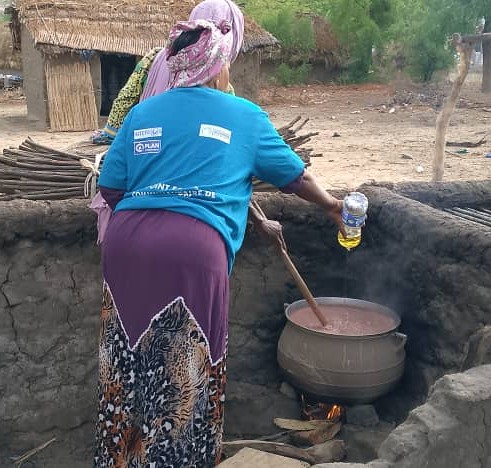
The Experience of the NIRA Association
In Tchounkoul, a group of residents, with the support of INTERSOS and AICS, created the NIRA association, based on the VSLA methodology. The group transparently manages savings and microcredit funds, supporting local activities such as the processing of agricultural products:
“With a loan of 5,000 CFA Francs, I bought peanuts, processed them into oil and cakes. Now I sell these products in front of my house. I’ve learned to save, manage money, and look ahead.”
An Approach that Strengthens Resilience
The activities implemented integrate nutrition, agricultural training, and economic support, reinforcing existing resources within communities. The women trained through the project – such as “mères lumière” (light mothers) or VSLA beneficiaries – play an active role in responding to malnutrition and caring for children.
INTERSOS will continue to work alongside communities in the Far North to help improve the health and food security of the most vulnerable families, supporting local, sustainable, and inclusive solutions.