



Joint work by the organisations that participated in COVAX resulted in a report that brings together all the challenges and opportunities faced in bringing vaccines into humanitarian settings and highlights valuable lessons for the future
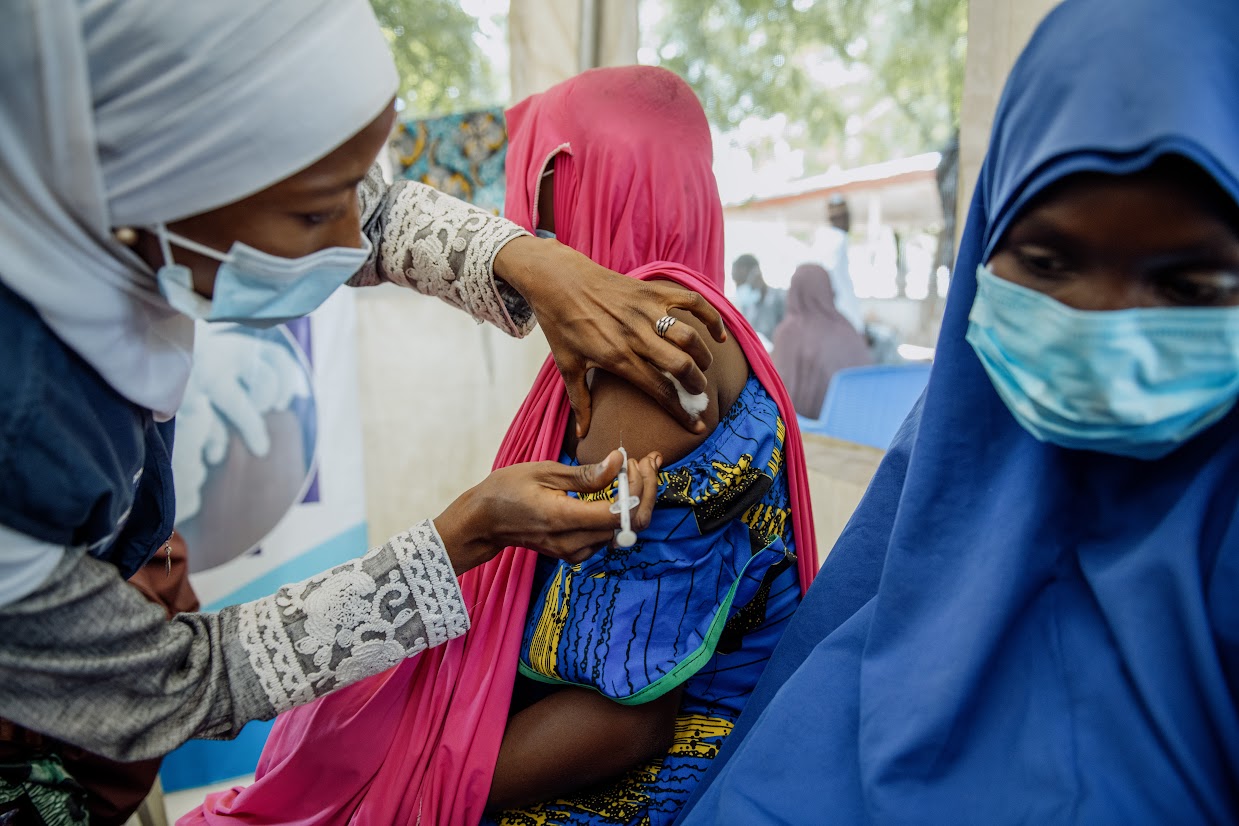
Nigeria, Borno State. Photo by Christian Tasso
The challenges faced in initiating and carrying out vaccination against COVID-19 for at-risk populations are not dismissed: what was learnt during the two-year Coronavirus pandemic and the vaccination campaign in countries affected by humanitarian emergencies will serve to manage possible future pandemics.
This was the theme of the meeting organised in Nairobi on the 14th and 15th of February 2023 by the COVID-19 Vaccine Delivery Partnership (CoVDP) and the key partners of the African Centres for Disease Control and Prevention: Gavi, Vaccine Alliance, Global Health Cluster, International Committee of the Red Cross, International Council of Voluntary Agencies (ICVA), International Federation of Red Cross and Red Crescent Societies, INTERSOS, Doctors Without Borders, bilateral partners, and UN agencies.
The lessons learnt were compiled in the report that emerged from this discussion and joint work over the months. Concrete steps to be taken in the future were listed to enable equitable responses during pandemics so that people in need of humanitarian assistance have access to the medical and public health measures – such as vaccines, therapies, and diagnostic tests -necessary to diagnose, prevent, or treat diseases in the event of a pandemic.
Data emerged from the report
The global launch of the vaccination campaign against COVID-19 revealed huge inequalities between and within countries. Many settings with high numbers of people identified as in need of humanitarian assistance and vulnerable groups – e.g. internally displaced persons, refugees, asylum seekers, stateless persons, minorities, prisoners, vulnerable migrants, and people living in hard-to-reach areas – had lower vaccination coverage than the general population.
By mid-March 2023, 65% of the world’s population had completed the first cycle of COVID-19 vaccines. In the low-income countries with the most significant humanitarian needs, 25% of the people who, without COVAX, would not have had access to the vaccination campaign, were covered by the first cycle of vaccinations, a higher percentage compared to the target of 20% set initially. Moreover, in these contexts, the strongly positive data concern all the work that was put in place during the pandemic and that remains in these countries as necessary capital to face other future pandemics: the training of vaccinators who will stay in the countries, the work of local operators who have raised the adherence to the COVID vaccination campaign and that will have positive effects, in terms of vaccination demand, on other vaccination campaigns, strengthening and training other staff on the cold chain.
The participation of INTERSOS
INTERSOS, thanks to the vital experience gained in the field in different countries, was able to take part in this joint work with the significant international actors who created the COVAX platform. In particular, in Nigeria and Yemen, we have collaborated on various activities: the management of the cold chain is necessary for the preservation of vaccines; the direct administration and distribution of vaccines both in urban contexts and in remote or difficult-to-reach areas; the training of local health workers; the involvement and awareness-raising of local communities and support for communication campaigns to reduce misinformation about vaccines.
In addition, we also worked in other countries – Burkina Faso, Afghanistan, Lebanon, Chad and the Central African Republic – initiating study and data collection phases to analyse the barriers to vaccination and actions to raise awareness among the population.
During the preparation of the Nairobi meeting, INTERSOS was a member of the Steering Committee and, together with the German Cooperation (GIZ), chaired one of the thematic working groups, group number 3, dedicated to Strengthening Health Systems and Pandemic Preparedness and Response in Humanitarian Contexts. “The COVAX platform has been an extraordinary human effort to contain and defeat the pandemic: an important work that has engaged together, efficiently, the most important global health actors around an issue that has brought the world to a standstill for two years“, explained Andrea Accardi, INTERSOS COVAX task force coordinator. “As INTERSOS – continued Accardi – we decided to participate to share our operational experience in the countries where we work. The difficulties we have faced since the beginning of the pandemic – he added – have provided valuable experience and outlined a path to follow, to continue reducing the effects of the COVID-19 pandemic and improving the response to a possible future pandemic”.
Necessary lessons for the future
The first essential starting point is that in pandemics, as in COVID-19, no one is safe until everyone is safe. Promoting the safety of all will decrease the likelihood of new virus mutations, increase global health security, and strengthen the commitment to achieve universal health coverage.
Another critical assumption is that humanitarian contexts are different and vary between and within countries. Governments are encouraged to take responsibility for all populations within their borders, including those in need of humanitarian aid. Therefore, in most contexts, in order to have an adequate response during pandemics, the delivery of vaccines and other public health-related tools to vulnerable populations must be government-led. At the same time, collaboration between local health services, health agencies, and humanitarian agencies is of the utmost importance.
Reaching the target population with vaccinations and other public health measures during pandemics requires different solutions and actions for different contexts so that no one is left behind. However, in a few cases, governments are sometimes unable to reach vulnerable people, such as in non-government-controlled areas where humanitarian assistance must be directly managed by humanitarian actors and where different strategies for access are needed.
Another point emphasized in the report is the recognition of the commitment and efforts of health workers and frontline vaccination providers during the COVID-19 pandemic, in the context of scarce resources. This highlights the need to harness resources for more timely and sufficient support in the future. Localisation is also necessary to improve the efficiency and effectiveness of vaccine distribution for vulnerable groups. Equally important is the contextualisation of vaccine responses, as contexts vary significantly and require customised approaches. Finally, one element to be emphasised is sharing experiences with COVID-19 vaccination among stakeholders in humanitarian contexts: many countries affected by humanitarian emergencies have gained several benefits from implementing the COVID-19 vaccination campaign. Indeed, both governments and their partners highlighted both the difficulties faced and the success factors.
DOWNLOAD THE REPORT HERE